
Our Mindset Must Be Dependency on God
Our mindset to accomplish our God-given tasks must be complete dependency of God. We thank the Lord for the advantages that bless us such as education, finances, a solid movement with strong doctrine and a vibrant history, and success stories that encourage us to persevere and do our best for God’s glory. But, all of our abilities are insignificant in and of themselves. The wise man has a mindset that depends on God, for he know that “unless the Lord builds the house, the builders labor in vain” (Ps. 127:1). Our mindset must be focused strategically on Proverbs 3:5-6: “Trust in the Lord with all you heart and lean not on your own understanding; in all your ways submit to him, and he will make your paths straight.”
The Biblical Foundation
Throughout the unveiling of human history, as recorded in the Bible, God empowered people to fulfill their God-given vision and for God’s glory. Often, the people God chose to use were not the most qualified or those with the most impressive backgrounds but rather people who were willing to be used by God. They received a task so great that it was beyond their abilities, so much so that without God’s help they could not fulfill it.
The Bible provides many examples of people who depended on God. In Genesis 6-9 we read of Noah, whom God chose to build an ark and fill it with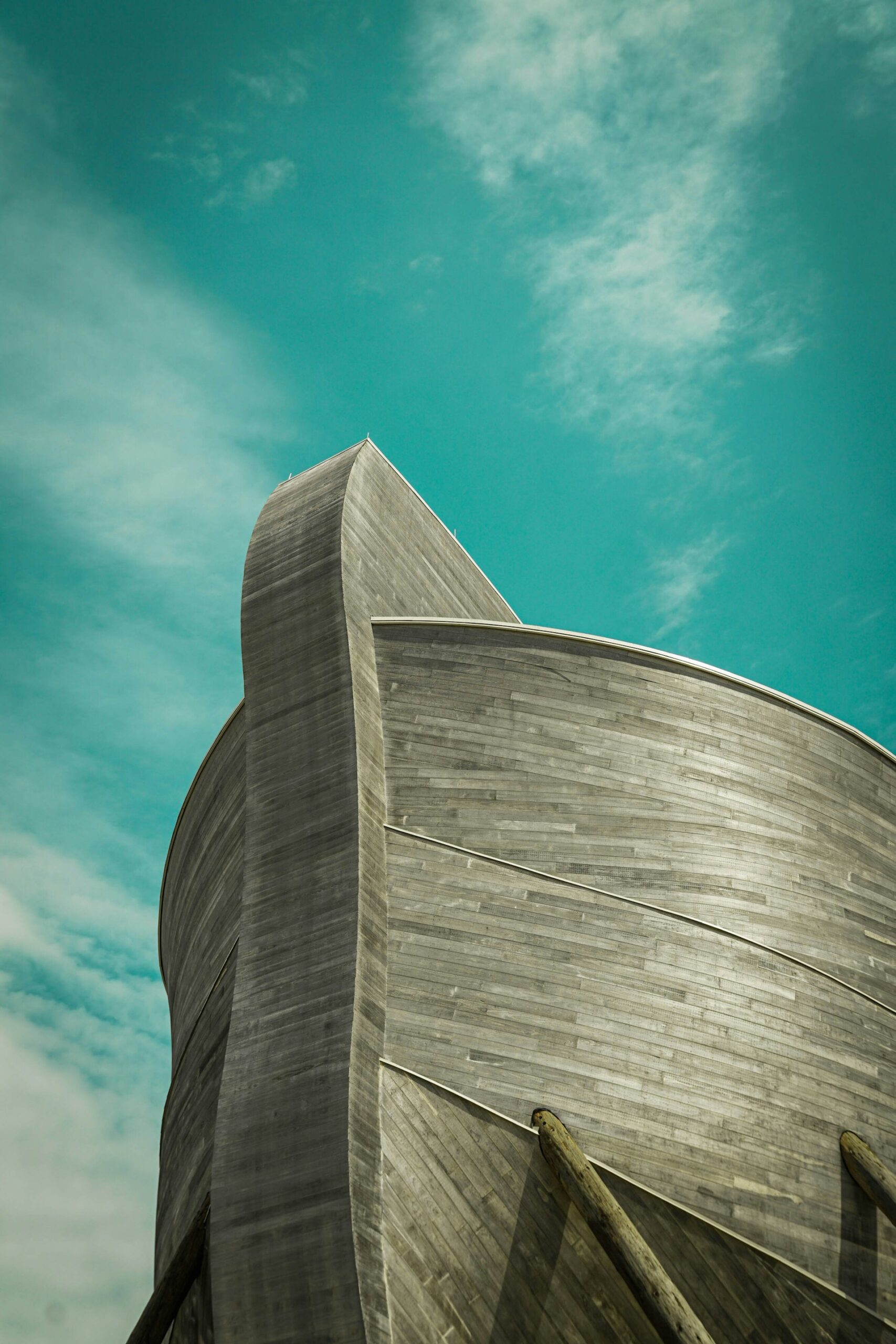 animals. Some believe that this event occurred in an era when people had not seen rain. As doomsday approached, Noah faithfully executed his God-given task and probably endured ridicule and torment by the people. Yet, his undying belief in God, as expressed by his faithfulness, caused him to move forward. The Lord empowered him and he fulfilled the task.
Another example is when Elijah challenged the prophets of Baal to call upon their deities to light an altar with fire so as to prove that their gods had ultimate power (1 Kings 18). When the pagan gods failed to answer, Elijah increased the odds of his God not being able to light the fire on the altar by adding water. Elijah then called on the name of the Lord in front of the pagans. Would God come through and light the fire? What if God did not answer? Did Elijah even consider that God would not prove himself? Apparently, Elijah was so relationally in tune with God that he never doubted that God would prove himself. Elijah completely depended on God, so much so that if God did not answer Elijah probably would have died at the hands of his pagan adversaries.
The book of Acts reveals many examples of believers who radically depended on God. Believers came from various backgrounds, societal statuses, economic statuses, and religious viewpoints. Jesus had given them a vision to reach the world, a mission to make disciples, and a strategy yet to be explained. They just knew that they were to go and that the Holy Spirit would empower and guide them along the way. Some believers preached to the Jews while others reached out to the Gentiles. Some Christ-followers were brought before spiritual leaders to explain their faith while others stood before political leaders. Ultimately, all of these people were led by the Holy Spirit, saw manifestations of the Spirit in their lives, and encountered persecution for their faith and actions on some level. Each person was so dependent on God that if He did not move in the situations where He placed them, they would be ridiculed, at least, and even be threatened unto death, at worst. God did move and His name was glorified.
A word that captures living with a mindset that is dependent on God is faith. Immediately, our thoughts go to Hebrews 11, a chapter that is called “The Hall of Faith.” The chapter lists examples of men and women who depended on God for their very lives. Key verses that we memorized in Sunday School and helped form our theological foundations from this chapter include the following:
- “Now faith is confidence in what we hope for and assurance about what we do not see” (v. 1).
- “And without faith it is impossible to please God, because anyone who comes to him must believe that he exists and that he rewards those who earnestly seek him” (v. 6).
- “All these people were still living by faith when they died. They did not receive the things promised; they only saw them and welcomed them from a distance, admitting that they were foreigners and strangers on earth” (v. 13).
- The author lists more examples of believers who held firm in their faith in God, even to the point of persecution and death. It is then declared, “the world was not worthy of them” (v. 38a).
- The chapter concludes with, “These were all commended for their faith, yet none of them received what had been promised, since God had planned something better for us so that only together with us they would be made perfect” (Heb. 11:39-40).
May we have the insight and wisdom to follow their examples and serve the Lord with a mindset that is dependent on Him and Him alone
Our Pentecostal Forefathers
A reading of the history of the Assemblies of God, reveals that believers depended on God completely or their mission would not be accomplished. Truly, they believed in Zechariah 4:6b, “‘Not my might nor by power, but by my Spirit,’ says the Lord Almighty.” God called believers to a task and equipped them to accomplish that task: for instance, believers witnessed about the love of God to people they knew; pastors planted churches in locations where no churches existed; and missionaries went to new nations, and learned a new language so they could preach the Good News to people they had never met.
Their message was centered on Jesus Christ. Their method was Pentecostal. Their mandate was to be holy as God is holy. Now, their mindset combined all of these values to produce a mindset dependent on God. The Apostle Paul understood this mindset as he wrote,
But he said to me, “My grace is sufficient for you, for my power is made perfect in weakness.” Therefore, I will boast all the more gladly about my weaknesses, so that Christ’s power may rest on me. That is why, for Christ’s sake, I delight in weaknesses, in insults, in hardships, in persecutions, in difficulties. For when I am weak, then I am strong.” (2 Cor. 12:9-11)
The title of an article in the Assemblies of God Heritage magazine captures the value of this mindset: “What Made Them Think They Could?: Ten Early Assemblies of God Female Missionaries.” These ten women “were neither powerful nor ideal candidates for missions. Yet they seized the opportunities to evangelize, disciple converts, and provide humanitarian care. They persevered in foreign lands to overcome spiritual opposition, physical dangers, emotional hardships, and cultures resistant to ministry by women. What made them think they could?” 15
God called these women to win the lost and disciple the found. The Holy Spirit empowered and emboldened them to impact their world. Frequently without proper financial support, they wrote of hardships on the field such as famines and natural disasters that led them to deprive themselves and left them susceptible to illness and diseases. They considered it a privilege to suffer for the name of Jesus and they expected persecution. They did suffer rejection and hardships, but chose to continue reaching out in evangelism, humanitarian care, and even in the building of Bible schools worldwide.
The women constantly affirmed their reliance on the power of the Holy Spirit for the missionary task. They adapted to their surroundings and circumstances, trusting that God would guide where, how and when to witness. The supernatural was a part of daily life. The women peppered their reports with the astonishing interventions of God and supernatural resources beyond their talents, abilities, and training. God accompanied their gospel proclamation with divine guidance and healing, godly power to overcome demonic forces, and other miracles.16
These missionaries demonstrated the mindset of total dependence on God. They needed Him to intervene, reveal himself supernaturally, provide, encourage, and comfort them or they would be overcome by the task and never recover.
Why Must We Address This Value
Stories of the early days of the Assemblies of God often mention that our forefathers were “from the wrong side of the tracks” and sometimes even lacked financial means. Nevertheless, this did not deter them from their goals of producing “the greatest evangelism effort this world has ever seen.”17 They won people to Christ, built churches, and established a global movement that now has over 68 million adherents. The question is, “How?” They did so by focusing on Christ, by living holy lives, and by being led and empowered by the Holy Spirit. In short, they relied on God to move. Often, they lacked the financial and personnel resources and so this forced them to rely so much on God that if He did not intervene then their efforts would fail. The verse, “When I am weak, He is strong” (2 Cor. 12:10) characterized their lives.
We must keep this spirit of reliance on the Lord: “blessed are the poor in spirit” (Matt. 5:3). We are blessed with financial position, educational training, and contemporary strategies, but we must not rely on these gifts for without the empowerment of the Holy Spirit and a move of God, our efforts will lack spiritual vitality and depth.
The Lord has blessed the Assemblies of God USA with a variety of resources: financial, personnel, talent, strategy, and passion. “To whom much is given, much will be required” (Luke 12:48) is a statement that sobers us and yet encourages us to maximize these resources to further the Kingdom of God. At the same time, many believers around the world do not experience the blessings evident in the AG USA. However, they are blessed with a great number of people who are called of God, empowered and led by the Holy Spirit, and serve as prayer warriors passionate about reaching their nation and sending missionaries to others countries. Both situations are blessed by God and find that the fulfillment of the primary objective comes through complete dependence on the Lord.
Unfortunately, a church can increase the size of the congregation without the help of God by updating the church music, offering a strong children’s program, having well-known speakers, presenting a good social media presence, and creating a first rate branding and promotions campaign. However, this does not automatically mean that the church is fulfilling the objective of evangelizing the lost and bring believers to spiritual maturity. These tactics are certainly beneficial, yet they are secondary to relying on the Lord to provide the resources, spiritual depth, and guidance to speak into the lives of individuals and the church, as a whole.
Missionaries, in general, have a great appreciation for the concept of depending on God. They must rely on the Lord or the work will not move forward. Their journey begins with walking by faith in their efforts to enlist prayer and financial supporters in their home nation. They share their calling, their passion to win the lost and disciple the found, and their burden to be used of God as He wills.
When they are new to their field of service, they do not know the language, the culture, the local customs, have no friends, and have yet to learn how to  communicate effectively with the indigenous people. Then, they work diligently in all these areas with the hopes of one day being able to connect effectively with the people in this land. But, they also pray, fast, and seek the Lord for help, hope, and direction. When they are weak, then He is strong.
An interesting topic, as we discuss dependency on God, is whether or not our comfort level is aligned with our effectiveness in fulfilling the Great Commission. If we are so comfortable with our ministry and how it is going, then we may not be doing all that could be done for the Lord. Attempting “great things” for God demands a complete reliance on Him. As someone once said: “Have your goal close enough that you can begin to see it and yet far enough away that unless God intervenes, it will not be accomplished.”18 We must refuse to settle for status quo but seek to be all that God wants us to be as people and as servants of the Lord.
Network211
Network211 has learned the value of depending on the Lord. While we can identify ways to expand the ministries and become more effective, first and foremost, we look to the Lord to provide. For the ones serving at Network211, we look to the Lord to provide for finances, personnel, answer prayers, and assist those who contact us through our website outreaches.
As with all developing ministries, financial resources are always a great need. Faithful donors, who lay a solid financial foundation upon which to build, bless the ministry of Network211. Their consistent and generous giving provides the financial resources for all aspects of the ministry, including building and upgrading our websites and content, daily operational expenses, promotional items, and Google advertising. If donors give, the ministry can forge ahead, but if they do not give, the ministry is stymied. We are dependent upon the Lord to speak to the hearts of donors and potential donors so that Network211 can move forward.
The vast majority of the personnel at Network211 are Assemblies of God World Missions missionaries who raise their personal monthly work budgets. As long as they receive their support, they are able to continue ministry at Network211. We are dependent on the Lord for financial backing, both for the ministry, as a whole, and for each individual who serves.
As with any ministry that envisions accomplishing even greater things for the Lord, Network211 is constantly in need of the Lord calling people to serve in the ministry. The need for more personnel is ongoing. While we attempt to inform Assemblies of God churches as to the opportunities available to serve at Network211, we are dependent upon the Lord to speak to their hearts and to call them into missionary service.
Funding for the ministry, financial support for each missionary, and the need for personnel are examples of reasons why the work day at Network211 begins in prayer. We recognize our complete dependence on God to enable, direct, and answer. Praying together as a team aligns us, individually and collectively, with the One who matters most. This time allows us to support one another for our personal and family needs and builds unity among the team.
We are thankful that people worldwide go online looking for answers and are depending on someone to present Truth to them. Some people are seeking solutions for the dilemmas of life that trouble them while others have needs that challenge their very existence as they search online “one last time” to see if anyone can provide them with a reason for living. We believe each person’s spiritual DNA has a God-given desire for a personal relationship with Him. People who do not know the Lord can react when they hear a presentation of the Truth for the first time. However, the Truth penetrates their facades and resonates deeply in their souls. They write to us and depend on someone to help them. We know that the “someone” they are seeking is Jesus.
While we praise the Lord when people write to let us know of their salvation, we also value comments from believers who are seeking answers to life’s issues and who need God to intervene in their situations. The Network211 “1-2-1 Connectors” respond with encouragement and with the Truth of God’s Word to inspire believers to continue to “fight the good fight” and not to be overcome by discouragement. When people encounter debilitating illnesses or insurmountable situations, they often feel that God has abandoned them and they are ready to give up of their salvation. We, at Network211, are dependent upon God to empower us by His Holy Spirit to answer these people with God’s wisdom in their moment of need. They are dependent upon God to move, and we are dependent upon God to journey with them to keep the faith.
May the Lord correct us immediately if we ever believe we can do the work of the ministry in our own strength. We need the Lord to empower and direct us as we obediently follow His strategy to fulfill His will.
━━━━━━━━━━
15. Rosemarie Daher Kowalski, “What Made Them Think They Could?: Ten Early Assemblies of God Female
Missionaries,” Assemblies of God Heritage, 34 (2014), 67.

16. Ibid., 68.

17. Rodgers, “Fully Committed: 100 Years of the Assemblies of God,” 26.

18. Anonymous quote of a speaker I once heard.